Dandelion Wishes

On July 1, 2022 I became the Community Chair of the Buffett Early Childhood Institute of the University of Nebraska. There are four possible Chairs that represent each campus in the University of Nebraska system for the Buffett Early Childhood Institute. Dr. Julia Torquati is the Buffett Early Childhood Institute Community Chair for University of Nebraska Lincoln. I am the Buffett Early Childhood Institute Community Chair for University of Nebraska Kearney. Both Buffett Early Childhood Institute Community Chairs for University of Nebraska Omaha and University of Nebraska Medical Center are currently vacant. Thursday evening, Buffett Early Childhood Institute threw me a party at the Kearney Country Club to celebrate our newly developed partnership. Below are my reflections on this occasion that I shared with everyone at the reception (and now with you).

Me at the College of Education at the University of Nebraska Kearney standing in front of the “Knowledge Tree” by artist Don Mitchell of Littleton, CO. The apple has 8 slices in it to represent educators who have made contributions: (1) Mary McLeod Bethune, (2) John Dewey, (3) Jaime Escalante, (4) Friedrich Froebel, (5) Thomas Jefferson, (6) Anne Sullivan Macy, (7) Helen Keller, and (8) Horace Mann. Photo by Erika Pritchard.

Being here today at the Kearney Country Club for a party thrown in my honor makes me feel so humbled to join the Buffett Early Childhood Institute’s team as the Community Chair representing the University of Nebraska Kearney (UNK) campus as part of our University of Nebraska (NU) system. I want to do two things: (1) express my gratitude, and (2) share what this opportunity as Buffett Early Childhood Institute Community Chair means to me.

Thank You

There are so many people to thank. First, thank you to Dr. Sam Meisels for inviting me to become the Buffett Early Childhood Institute Community Chair. His contributions to the early childhood field are remarkable, and I have immense respect for his pioneering work as the founding Executive Director of Buffett Early Childhood Institute. When I interviewed for my UNK job, I got to meet Dr. Meisels on Zoom and was star struck. I’d been a Meisels fangirl for many years, and used his works to inform my own in assessment, and measures he created called the Work Sampling System and Ounce. I am grateful to Dr. Meisels for his fabulous career and dedication to improving the lives of children and families, as well as for inviting me to be part of this prestigious team at the Buffett Early Childhood Institute. Thanks a million to the leadership team at Buffett Early Childhood Institute for welcoming me to be part of your family. I am thrilled for all the exciting ways we will collaborate to continue to make Nebraska the best place to be a baby.

I would like to thank my Dean, Dr. Mark Reid, from UNK College of Education for his leadership and all the ways he has inspired and supported me. One of my favorite quotes from Dean Reid is, “Professional and calm solves problems.” I’ve used this as a pep talk for myself. Many thanks to: NU President Ted Carter, NU Provost Jeffrey Gold, NU Vice Provost David Jackson, UNK Chancellor Doug Kristensen, UNK Vice Chancellor Kristen Majocha, UNK Graduate School Dean Mark Ellis, UNK CBT Dean Tim Jares, UNK Director of Research Sharon Obasi, UNK Office of Sponsored Research Travis Reynolds, Vice President of Alumni Relations & Development at the NU Foundation Lucas Dart, UNK COE Associate Dean Miechelle McKelvey & Assistant Dean Scott Unruh, Dept. Chairs Chandra Diaz and Kyle Luthans, and Assistant Teacher Education Chairs Dawn Mollenkopf and Rebecca Nelson. Getting to work alongside amazing people at UNK and NU who care deeply for our students and NU mission is such a joy. I can imagine it is hard work being an academic administrator and this All Star team make it look so easy.

My mentors have helped me navigate my professional life. Their mentoring has inspired me in so many ways to realize potential in myself and others. I am also grateful to my team in the Early Childhood Inclusive program, Dept. of Teacher Ed, COE, friends across UNK campus and UNK Plambeck Early Childhood Center, as well as friends in the NU system at our sister campuses that I’ve gotten a chance to work with since arriving in 2021. I am impressed everyday by the dedication you have to serving our students, contributing to research, and outreach. I am grateful for our Nebraska early childhood care and education workforce, children, and their families. My college students, past and present, are such a big part of my life and I am appreciative for all the ways college students teach me. Thank you: Mr. Ron Williams, Ms. Cille Williams, and the Williams family for creating the Ron and Cille Williams Endowed Chair in Early Childhood Education that has enabled me to focus on outreach as part of my job at UNK. With a smaller teaching load and resources, the Williams family endowment supports me as I strive to make lives better for children and families in Nebraska and beyond through high quality early childhood education.

It is with a thankful heart for my family that I get to do what makes me sparkle. I want to thank my wonderful husband, Robert Macy, who has encouraged me and supported me since I was a special education teacher, then when we were both graduate students at the University of Oregon, then as academics struggling to establish our careers, and co-parenting our smart, talented and kind-hearted daughter Adriana. Thank you precious Adriana Maria for making me a Mommy and the opportunity to watch you grow and develop into the supercalifragilisticexpialidocious person you are. When I told you both I wanted us to go to Nebraska, you sweetly jumped on board this grand adventure to the beautiful Heartland of America. I cannot thank you enough. I love you both so much! xo

Willa Cather wrote in her novel My Ántonia, “Ain't it wonderful, Jim, how much people can mean to each other?” Ron and Tina Galliano, my parents who traveled from Seattle to be here with us today, mean the world to me. They modeled for my two brothers and I how to respect and care for others whether it was serving people in their Italian restaurant or beauty shop. My Dad built a hair salon in our home and Mom served our community by doing hair for women in my hometown. Tuesday through Saturday we had people come into our home. My parents treated people in our community as though they were family. If one of Mom’s ladies in the beauty shop was celebrating something special or had a bad day, Mom would go in the kitchen and get her a pizzelle and little shot of Amaretto. I learned from Mom & Dad’s model how important it is to create a connection for everyone to feel included. Lifting up and serving others is rewarding. My brother and his girlfriend are also here with us today from Seattle, as well as a former student of mine who traveled from Bay Area to celebrate this special honor from Buffett Early Childhood Institute. Thank you for your gigantic hearts and being here today, Mom, Dad, Rico Galliano, Molly Dore, and Bingbing Zhang. Ti voglio molto bene.

What the Buffett Early Childhood Institute Chair Means to Me

I love to find dandelions that have turned into magic puffballs. When I was a little girl growing up in Seattle, it was a magical time to find dry dandelions. It was only a matter of time until dandelions became damp and soggy from the Puget Sound mist. So, you had to time it just right. Pick fuzzy dandelions, make a wish, and then blow hard into the fluff and watch the seeds float into the air. Did you ever do that?

The seeds spread all over the place. I remember a recurring wish I would make back then. I was wishing I could grow up and become a teacher. For as long as I can remember I’ve had admiration for the teaching profession that started first by watching Mister Rogers’ Neighborhood on television. Teachers were, and are, like rock stars to me. My parents have a picture of me around age 3 where I have all my dolls assembled into a class and me teaching. Educators have always been elevated in my mind as a profession I aspire to become, respect, admire, and love with all my heart. What a beautiful logo of the dandelion for the Buffett Early Childhood Institute. On a spring trip to a conference, Dr. Kate Gallagher from the Buffett Early Childhood Institute, shared the story of the logo with me. The image is a symbol for transformation. From a tiny seed great ideas can be propagated into something grand. Buffett Early Childhood Institute represents for me how innovations and ideas can be spread to elevate the early childhood profession, as well as community outreach and research to benefit children and families.

My first class.

It is every child’s right to have access to high quality education and care in the early years. Yet, right now, many children and their families are missing out on a chance for early childhood education and care. This Chair allows me the privilege and opportunity to join the Buffett team in service to children, families, and our workforce. Welcoming collaboration!!! Open invitation to anyone hearing or reading this message. The Buffett Early Childhood Institute motto is, “Start early, start well.” Dandelion wishes could be planted and grown when we all come together.

This Chair means that I have resources to plant, nurture, and help grow good things for children with my Buffett Early Childhood Institute family. Pathways for community engagement is what this opportunity means to me. Together we partner with others to serve our communities through translational research, practice, policy, and outreach. The Institute’s mission is, “to transform the lives of young children by improving their learning and development.” We can realize this mission with the rapprochement of partnerships within our community to include education, health, legislative, government, non-profit, business, and social sectors to implement research-based early childhood services for children.  

Hand in hand/mano a mano, we come together to make the world a better place with our energy and love for our children, families, neighborhoods, community, and each other. We do this by rolling up our sleeves and putting our hands to work to create something that is perennial. At UNK we can use our hand, or mano, to throw lopes by taking our thumb to the middle and ring fingers and leave the index and pinky fingers to dance in the air. It looks like an antelope’s horns. Lopers throw lopes to show our care for one another in our community. If you take that same position and just move the thumb out to the side (middle and ring fingers remain in palm of hand) you will be able to say, “I love you” in American Sign Language. I love YOU for all you do for our community and the children, their families, and our early childhood workforce. Willa Cather said, “Where there is great love, there are always wishes.” My dandelion wish for me and you is that we go together with all our hearts to make the world a better place for children everywhere.

I would like to leave you with some words by Fred Rogers. “In all that you do in all of your life, I wish you the strength and grace to make choices which will allow you and your neighbor to become the best of whoever you are.” xo
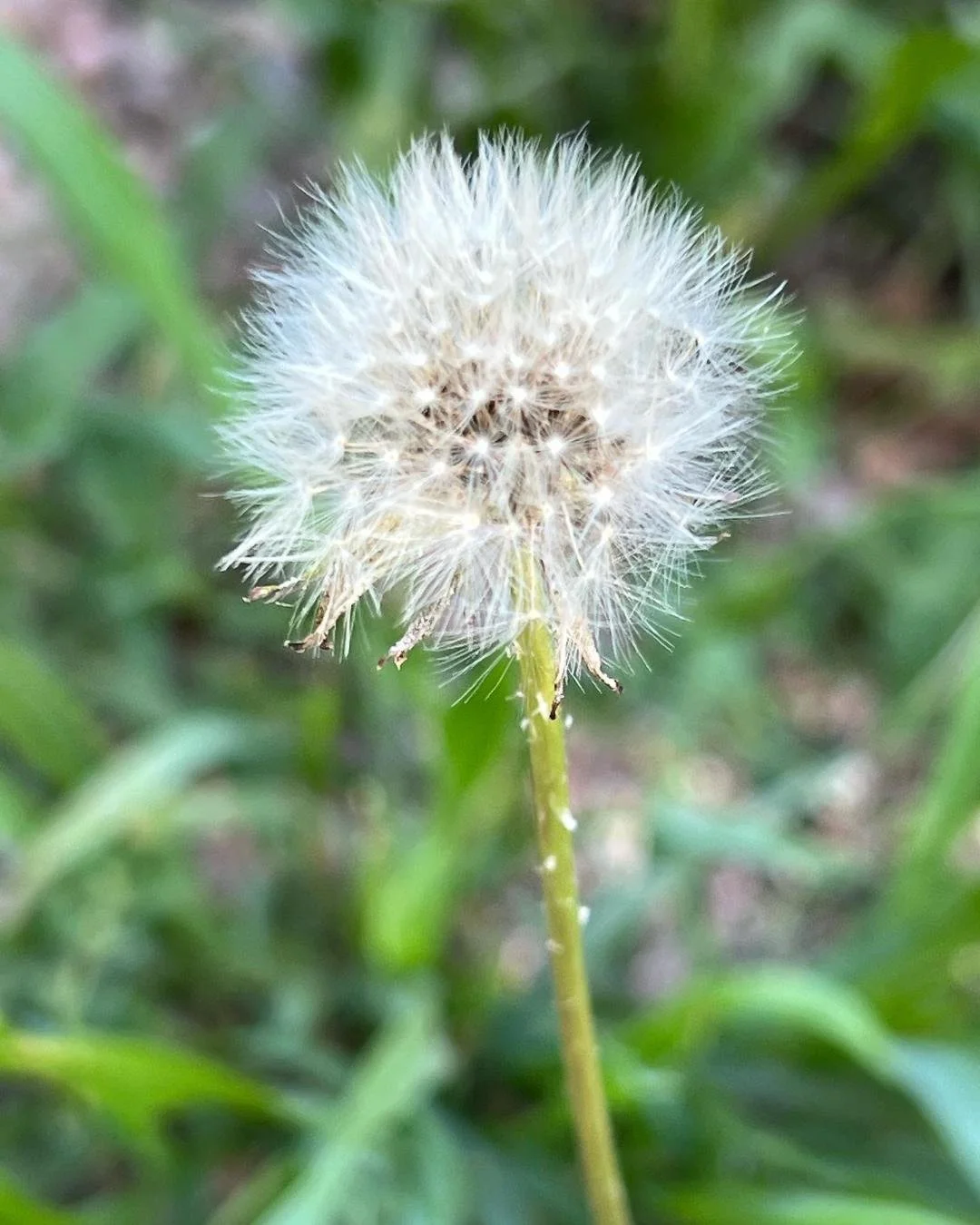
Make a wish.


Premack Principle

Routines can become boring. You know you are an early childhood educator when your natural instinct is to sing during transitions. Recently I was giving directions and sang a tune while going through the steps. That is one way to make routines less boring for children. Another way to spice up daily routines for children is to embed natural reinforcers into the routines.

Doing the thing you need to do is followed by the thing you desire to do. That is a basic explanation of the Premack Principle. An example of Premack Principle is telling your child to do their homework first, and then they can join the neighborhood kids and jump on the trampoline in the backyard.

In his book “Atomic Habits,” James Clear talks about a coach he interviewed where he asked what sets really good athletes apart from others, and what do they do differently. The coach responded by saying that exceptional athletes are those that can overcome the boredom of training. Doing the same thing over and over while working toward something is often necessary to reach optimal performance and goals without the loss of motivation along the way. Motivating factors could be explored. Can we use this concept of Premack to prime the environment for routines?

I use the Premack Principle at home and work. We have a busy week in my household. When we move through Monday to Friday and do what we need to do, we get to do something fun at the end of our week. Friday afternoons I pick my daughter up from school and we meet up with friends at a coffee shop and knit. At work, I condition my writing practice with reinforcement. Once I complete a writing project, I buy myself a present. The Premack Principle is doing the thing I need to do, followed by the thing I really want. Sometimes the thing I need to do is already motivating and may not need a reinforcer, but other times natural or external reinforcement helps to stay motivated.

How can we leverage routine activities to promote child development and learning? We can support positive behaviors by understanding what motivates each child. Make routines more attractive by helping the child get what they want. Learn what the child desires and then create time in the schedule to make it happen once the child does what they need to do. Make the routine(s) fun for the child. Provide timely feedback integrated into the routine. We can support children’s behaviors by paying attention to routines.

Clear, J. (2018). Atomic habits. An easy and proven way to build good habits and break bad ones. New York: Penguin Random House.

Kindness

“When we feel love and kindness towards others, it not only makes others feel loved and cared for, but it also helps us to develop inner happiness and peace,” ~Dalai Lama.

The Dalai Lama talks about how being kind can lead to our own peace and happiness. Kindness matters and our local businesses and non-profits were on board too with their own campaigns to spread the word. This move to the Heartland has been such a wonderful experience for me and my entire family. Grateful for my personal and professional rewards as I reflect on my moving anniversary. Not just in the Heartland but everywhere kindness is all around us. Maybe just being ready to look for it wherever we are is the key? Look for the kindness heartbeat where you are. What do you notice? How does it make you feel? How can we promote acts of kindness?

Poet, Mary Oliver, posed a question, “Tell me, what is it you plan to do with your one wild and precious life?" Let’s plan to cultivate kindness every day and everywhere. If you happen to see me driving by, wave! Please just assume that I’m driving slow (not to irritate you) because I’m checking on my animals or the corn. I’ll wave back thrilled to see you while enjoying this amazing ride. #makekindnessloud

What is executive functioning?

In an interview from the 1960s, Mr. Fred Rogers was explaining how young children move through stages in their development like chords on a piano. Some keys combine to make an easy transition from one chord to another, whereas there are some chord combinations like the F to the F sharp chords that are more challenging to navigate.

Mr. Rogers explained how his role is to help children navigate across life’s chords. Mister Rogers’ Neighborhood was a television show aimed at preschoolers where there was a focus on children’s social and emotional development. Executive functioning is necessary for children’s growth and development. Executive functioning is similar to his piano chord example because they both are processes that combine elements. Planning, organizing, self-regulating, and working memory are fundamental processes that make up executive functioning.

Our role can be to help support children with executive functioning. Mr. Rogers was a musician. A musical term that may help with this idea that we can promote executive functioning is legato. In Italian, the word legato means smooth and connected. Sometimes the music is meant to be played with smooth and connected transitions. Adults can help children with smooth developmental transitions when we observe each child’s development in executive functioning and support them as they grow.

Routines

Routines are an important part of our daily lives. As early childhood educators we might focus on children’s routines and schedule, but what about our own? Building a schedule of daily routines with clear expectations may help us reach daily goals. Start by looking at the day and what needs to get accomplished. Build in time for breaks and meals. Planning can ensure that we address our needs and priorities. Effective routines can help us feel safe and may lead to increased productivity. And another thing…don’t forget to play!

Responsive and Supportive Environments for Children

Relationships are at the heart of our work in the classroom with our children, with their families, and with our colleagues. Promoting responsive and supportive environments for children starts with setting up the classroom and curriculum with an eye toward preventing undesirable behaviors. Positive behavior supports is an approach that has an evidence base and research to show that it works. If a child experiences challenging behaviors consider: when the behavior occurs,  what could trigger the behavior, what sustains the behavior, what other factors lead to the behavior occurring, and who are the other people involved when the behavior occurs. Operationally define the behavior. Knowing what the behavior is can help with subsequent steps in behavior analysis and intervention considerations.

Salient features of effective classroom management include high-quality learning experiences that engage children and effectively implementing positive behavior supports. When challenging behaviors arise, respond with compassion for the child and try to understand the reason for the behaviors. Take a deep breath and check in with our own stress during the undesirable behavior. Support the child to address their special needs. If chronic behavior challenges exist, work with team that includes the child’s family to create a positive behavior support plan that will allow the collection of useful data (Zuluah & Zinsser, 2019). Monitor progress. Adjust when needed. Share progress with team.

Positive behavior support policies and practices promote effective classroom management (Price & Steed, 2016). Some practices that promote ways to address challenging behaviors are using prevention focused ways to create a supportive environment for children with the way the daily schedule is designed (e.g., not too many transitions during the day), and establishing predictable routines. Knowing each child, what they need, and supporting their positive behaviors will be useful strategies.

Each day presents a new blank slate to improve. Opportunities to invite positive behaviors occur through self-reflection, implementing positive behavior supports, and collecting data on the effectiveness. Data-based decisions will be implemented and then monitored to evaluate progress.  


Sources: Price, C. L. & Steed, E. A. (2016). Culturally responsive strategies to support young children with challenging behavior. Young Children, 71(5). Retrieved from https://www.naeyc.org/resources/pubs/yc/nov2016/culturally-responsive-strategies

Zuluaf, C. A. & Zinsser, K. M. (2019). Forestalling preschool expulsion: A mixed-method exploration of the potential protective role of teachers’ perceptions of parents. American Educational Research Journal, 1-32. DOI: 10.3102/0002831219838236

“I Love You” Rituals

It started with a smash cake when she turned one. A layered sponge cake with pink frosting. The cake had dark shades of pink frosting on the top and gradually got to shades of light pink toward the bottom of the cake tower. Whipping cream was sandwiched between each layer.

This year she had a milestone birthday. I marked it by making a frozen vanilla cream cake topped with fresh strawberries. I found the recipe in the Nebraskaland magazine. Every year it is a different recipe, but the ritual remains.

Custom cake is one of the “I love you” rituals I do with my child. Baking for her is a way to show my daughter my love for her.

As an educator we show our children and their families love too.

“I love you” rituals can be the way we design our environments, create our curriculum, play, and more. The first week in April we have a ritual that shows children how much we love them when communities across America celebrate Week of the Young Child (WOYC). This “I love You” ritual has been going strong for 50+ years. Happy Birthday, WOYC! I love celebrating your birthday. And many more…!

Note: I wrote this for the Buffett Early Childhood Institute blog. Click on this link if you want to read it on the Buffett Institute website. Thank you Erin Duffy and Buffett team for inviting me to share this experience with your readers.

Reflections as an Intentional Practice

Have you ever wondered: “what do I do with the negative thoughts I feel?”

Mr. Fred Rogers asked children a similar question about what children can do with the mad they feel. It is a good question to ask when we are emotionally tasked with a challenging situation. For effective emotion regulation, adults can address negative thoughts and perceptions. Identifying negative thoughts starts with awareness. We can reflect on our negative thoughts to determine how they make us feel (Hole & McEntee, 1999). Stop and take a deep breath (Kamenetz, 2016). Inhale and exhale. Once calm, ponder how the thought makes you feel. What do you have to support or show that the negative thought is valid? Invalid? What could be a more accurate or different way to think about the negative thought? Sometimes we need to change the channel on thoughts like we do with the radio or television.

Compassion fatigue is real and can be a barrier to creating connections. We can address compassion fatigue by starting with ourselves to take time for self-care (Parlakian, Kinsner, & Gehl, 2018). Using praise and positive language is beneficial for children, as well as each other when we collaborate on teams. We can continue to strengthen the ways we build one another up by working on it everyday through communication and positive interactions (Goodwin, 2015; Jennings et al., 2017; Patti et al., 2018). Productive and positive conversations can be a foundation for trusting relationships.

If we create opportunities to practice, reflect, and monitor progress we can continue to get better. High-quality talk is something we can exercise like a muscle. What we practice all the time can become part of a more lasting or permanent repertoire. Practice does NOT make perfect. Instead practice makes permanent. What we practice again and again can stick. Reflect on feelings. Through reflections we can take time to ponder, wonder, and see the world and try to make sense of our feelings.

IMG_4402.JPG

References

Goodwin, B. (2015). Getting unstuck. Educational Leadership, 72. Retrieved from www.ascd.org/publications/educational-leadership/jun15/vol72/num09/Getting-Unstuck.aspx

Hole, S. & McEntee, G. H. (1999). Reflection is at the heart of practice. Educational Leadership, 56(8). Retrieved from http://www.ascd.org/publications/educational-leadership/may99/vol56/num08/Reflection-Is-at-the-Heart-of-Practice.aspx

Jennings, P.A., Frank, J.L., Doyle, S., Oh, Y., Rasheed, D., DeWeese, A., Cham, H., Brown, J.L., Davis, R., DeMauro, A.A., & Greenberg, M.T. (2017). Impact of the CARE for teachers program on teachers’ social and emotional competence and classroom interactions. Journal of Educational Psychology, 109(7), 1010-28.

Kamenetz, A. (2016). When teachers take a breath, students can bloom. National Public Radio. Retrieved from https://www.npr.org/sections/ed/2016/08/19/488866975/when-teachers-take-a-breath-students-can-bloom

Parlakian, R., Kinsner, K., & Gehl, M. (2018). Mindfulness for early childhood professionals. Zero to Three. Retrieved from https://www.zerotothree.org/resources/2269-mindfulness-for-early-childhood-professionals

Patti, J., Holzer, A., Stern, R., Floman, J., & Brackett, M. (2018). Leading with emotional intelligence. Educational leadership, 75. Retrieved from http://www.ascd.org/publications/educational-leadership/summer18/vol75/num09/Leading-With-Emotional-Intelligence.aspx

It’s the Little Things That Count

The power of simple interactions can create a culture of wellness. It’s the little things that count. A smile. Kind words. Laughter. Dr. Shawn Achor says that only a quarter of job success is predicted by IQ, and that 75% of success in the workplace is predicted by social connections, level of optimism, and ability to see stress as a challenge instead of a threat (2011).

Social connections are good for us. Friendships can reduce stress and boost happiness (Achor, 2013, 2018; Alvarado & Shafer, 2017; Kohll, 2018). Training our brains for optimism could be similar to training for an athletic event. After taking a long hiatus from running, I recently started up again to prepare for a Thanksgiving Turkey Trot 5K race. Whenever I have a chance, I lace up my Asics and hit the road for a long and sweaty run. We can do similar things to prepare and train for happiness. Fake it until we make it. Here is a prescription for happiness from researcher, Dr. Achor, to train our brains to have positive and sustainable changes for happiness: (1) meditate (Dweck, 2007), (2) exercise (Babyak et al, 2000), (3) journal (Slatcher & Pennebaker, 2006), (4) practice gratitude (Emmons & McCollough, 2003), and random acts of kindness (Lyubomirsky, 2005).    

Responsive relationships support child development and learning (Harvard Center on the Developing Child). Early childhood educators use daily interactions to create high quality environments that are rooted in positive relationships. It is the little things that count that can give us the happiness advantage.


Sources:

Achor, S. (2011). The happy secret to better work [Video File]. Retrieved from https://www.ted.com/talks/shawn_achor_the_happy_secret_to_better_work

 Achor, S. (2011). The happiness advantage. London, UK: Virgin Publishing.

 Achor, S. (2013). Before happiness: The 5 hidden keys to achieving success, spreading happiness, and sustaining positive change. New York: Crown Business.

 Achor, S. (2018). Big potential: How transforming the pursuit of success raises achievement, happiness, and well-being. New York: Currency.

 Alvarado, S. & Shafer, L. (2017). The power of simple interactions. Usable Knowledge. Retrieved from https://www.gse.harvard.edu/news/uk/17/11/power-simple-interactions

 Center on the Developing Child. Three principles to improve outcomes for children and families. Retrieved from https://developingchild.harvard.edu/resources/three-early-childhood-development-principles-improve-child-family-outcomes/

 Kohll, A. (2018). 5 reasons social connections can enhance your employee wellness program. Forbes. Retrieved from https://www.forbes.com/sites/alankohll/2018/01/31/5-ways-social-connections-can-enhance-your-employee-wellness-program/#7e2e2d56527c

Establishing a Consistent Daily Schedule and Routines

It can be a challenge to create a consistent daily schedule and routines. Hough (2019) describes the importance of recognizing the struggle. Children, like us, need predictable routines and a daily schedule of events and activities that remain consistent. This alleviates stress. To implement predictable routines, analyze the daily schedule. Note what happens throughout the daily schedule. Determine where there are problem areas and times that seem to go smoothly, as well as times of the day that are challenging. Implement a plan to address the problem areas. Observe what happens when the plan is implemented by collecting informal and/or formal data. Avoid roadblocks by responding to data. Make data-driven decisions. Make changes when needed to modify schedule and/or routines. Routines can promote an environment that feels safe, secure, and welcoming (CESEFEL, 2007; Perry, 2000).


Sources: Center on the Social and Emotional Foundations for Early Learning. (2007). Helping Children Understand Routines and Classroom Schedules. Retrieved from http://csefel.vanderbilt.edu/kits/wwbtk3.pdf 

Hough, L. (2019) 5 Easy Steps to Helping Early Childhood Educators De Stress. Harvard Ed. Magazine. Retrieved from: https://www.gse.harvard.edu/news/ed/19/01/5-easy-steps-helping-early-childhood-educators-de-stress

 Perry, B. (2000). Creating an emotionally safe classroom. Scholastic. Retrieved from https://www.scholastic.com/teachers/articles/teaching-content/creating-emotionally-safe-classroom/

Sense of Belonging

Belonging is a path for inclusion. UNESCO has a new publication entitled, “Inclusive early childhood care and education: From commitment to action.” Fostering a sense of belonging is critical when we design and implement inclusive environments for all children. We can foster belonging by using asset-based language. Lewis (2017) says that we can help people feel welcome by: (a) showing recognition for their accomplishments, (b) encouraging expression of their opinions freely, and (c) valuing their contributions. These three basics can work for children and adults. Check in and support inclusion for all. Everyone benefits when we ALL belong where we are.

Sources:

Lewis, G. (2017, November 2). Why Creating a Sense of Belonging Is a Gateway to Diversity and Inclusion. LinkedIn. Retrieved from https://business.linkedin.com/talent-solutions/blog/diversity/2017/why-creating-a-sense-of-belonging-is-a-gateway-to-diversity-and-inclusion   

UNESCO (2021). Inclusive early childhood care and education: From commitment to action. https://unesdoc.unesco.org/ark:/48223/pf0000378076

Motivation

Is there a sense of community and commitment to accomplish goal(s) for the organization? Workplace engagement is worthy of examination. Knowing ourselves is a building block for guiding and supporting organizational purpose.  In the movie “Stand and Deliver,” real life educator Mr. Jaime Escalante tells his students that in order to succeed we all need GANAS.

What is “ganas?” Motivation. Ganas is translated from Spanish to mean a desire to succeed. We need to stay motivated and be intentional in our commitment and purpose.

Questions we can ask ourselves are: do I know my organization’s purpose as well as my own, do I believe the work I do makes a difference, and can I grow and continue to learn new things (Jenkins & Quinn). When we know ourselves we can better connect with our purpose.

Reference:  Jenkins, J., & Quinn, T. (n.d.). Connecting people + purpose. Steelcase. Retrieved from https://www.steelcase.com/research/articles/topics/brand-culture/connecting-people-purpose/

Cruise, WA, etc. 010.jpg

Shaping Norms by Creating an Adaptive Culture

We can shape norms by creating an adaptive culture. Shared leadership can transform and promote advances in our practices (Fitzsimmons, 2016). Explicit or implicit norms exist in early childhood education settings.

Take curriculum for example. An explicit norm may exist where early childhood professionals may be required to follow a specific curriculum that was chosen by someone else. An implicit norm may exist where early childhood professionals are freely using their resources, activities, and materials to enhance the curriculum as they meet external guidelines and standards.

The curriculum example is a form of normalizing risk-taking as early childhood professionals adapt to shaping professional norms. Medvic (2017) states that we want organizations that encourage, “innovation and empowers its people to make decisions.” How we support people to take risks is by creating a culture that fosters exploration and experimentation (Derler, 2017; Gibbs & Irons, 2011). Transformation starts now! Now get out there and go be amazing!

Transformational Practices

Transformational Practices

Adapting to Change

Change is inevitable. How we manage changes can set a course for success (Kislick, 2018). An adaptive challenge that may occur in an early childhood setting is learning that the organization will be adopting a new assessment. “UGGHHH” might be the first emotion we are feeling as we think about all the new and different things we will be required to take on because of this new mandate.

This challenge has adaptive elements, because how we choose to react is up to us.

For example, adaptive components to the challenge may be to: gather information, use a growth mindset, remain calm, be positive, work with team to support one another (Bryan, Matson, & Weiss, 2007), and jump into professional development moving forward to implement new assessment with fidelity and confidence.

It is important to address the challenge because change will occur whether we accept it or not (Goodwin, 2015). Accept the challenge and it will turn into an opportunity not a problem (Duncan, 2012). If interested, below are further readings on adapting to change in the workplace.

References

Bryan, L. L., Matson, E., &  Weiss, L. M. (2007). Harnessing the power of informal employee networks. McKinsey Quarterly. Retrieved https://www.mckinsey.com/business-functions/organization/our-insights/harnessing-the-power-of-informal-employee-networks 

 Duncan, R. D. (2012). In times of change, “What’s in it for me?” Is the question you need to answer. Fast Company. Retrieved from: https://www.fastcompany.com/3001250/times-change-whats-it-me-question-you-need-answer 

 Goodwin, B. (2015). Getting unstuck. Educational Leadership, 72. Retrieved from www.ascd.org/publications/educational-leadership/jun15/vol72/num09/Getting-Unstuck.aspx

 Kislik, Liz (2018). How to tell your team that organizational change is coming. Harvard Business Review. Retrieved from https://hbr.org/2018/08/how-to-tell-your-team-that-organizational-change-is-coming

Me during big changes in my life.

Me during big changes in my life.

Stress

Tonight. I went for a run on my usual route that takes me by an early care and education center in my neighborhood. I watched tired parents picking up their tired children. Stress can occur anytime, but especially at the end of a long day. Stress is a powerful force (Macy, 2018). Research has shown that too much stress can change a child’s brain (Center on Developing Child, 2014; Evans & English, 2002; Murgia, 2015).

Transitions can be stressful for children, parents, and professionals.

Adults who are responsive to children’s needs pay attention to their cues, emotional states, basic needs, and more to support a bond. Responsive caregiving where the child has an adult give them individualized attention can reduce stress for children, as well as give them strategies for coping (Center on the Developing Child, 2017; Jones & Kahn, 2017; Scudellari, 2017). Now more than ever with stressful situations occurring as a result of the changing dynamics of the global pandemic, let us pay careful attention to stress children are experiencing, and support children as they change routines or adapt to new schedules.

IMG_0941.JPG

References

Center on the Developing Child (2014). Excessive stress disrupts the architecture of the developing brain. National Scientific Council on the Developing Child.

Center on the Developing Child (2017). Three principles to improve outcomes for children and families. Science to Policy and Practice.

Evans, G. W. & English, K. (2002). The environment of poverty: Multiple stressor exposure, psychophysiological stress, and socioemotional adjustment. Child Development, 73, 1238–1248. doi:10.1111/1467-8624.00469

Jones, S. & Kahn, J. (2017). The evidence base for how we learn: Supporting students’ social emotional and academic development. The Aspen Institute.

Macy, M. (2018). Stranger danger. Buttercup Blog.

Murgia, M. (2015). How Stress Affects Your Brain. YouTube video.

Scudellari, M. (2017). Preschoolers could have less stress if they get positive one-on-one time with teachers. The Boston Globe.

Play Goals

Play skills are an important part of a child’s growth and development. Play is meant to be fun, however in group settings play can be difficult for children. One of the things that might make play a challenge for young children is being able to navigate the environment and social interactions with adults and peers during free play time. “For some children, self-direction is not a problem, but for some children with special needs, especially those with autism, self-direction in relation to play and leisure time may be difficult” (Sundberg, 2008, p. 143).

After observing a child and conducting an assessment, we can create play goals for a child. It would be helpful to select the skills where the child shows emergent behaviors in this area of development.

If a child is having difficulty with self-directed play, here are some instructional targets with corresponding behavioral objectives. Here are some possible play goals for “Marisa” (Bricker et al. 2022). 

1.      During free play time with peers, Marisa will use language to initiate a social interaction with peers at least once a day using words, gestures, motor actions, communication board, and/or cards.

2.      During free play time with peers, Marisa will use language to sustain a social interaction with peers at least once a day using words, gestures, motor actions, communication board, and/or cards.

3.      During free play time, Marisa will use conversational rules when communicating with adults in at least one communicative exchange daily.

4.      During free play time, Marisa will use conversational rules when communicating with peers in at least one communicative exchange daily.

5.      During free play time, Marisa will communicate personal likes and/or dislikes using either verbal or non-verbal strategies with adults and peers.

Once the goals have been created for the child, Marisa, the next phase is for educators to implement instruction/intervention to help the child reach their goals. Mr. Fred Rogers said, “Play gives children a chance to practice what they are learning.” We can support children as they learn to engage in self-directed play by creating goals for play and then monitoring how the child is responding.

DSC_0095.JPG

Play

“Play gives children a chance to practice what they are learning.”~Mr. Rogers

References:

Bricker, D., Dionne, C., Grisham, J., Johnson, J.J., Macy, M., Slentz, K., & Waddell, M. (2022). Assessment, Evaluation, and Programming System for Infants and Children, Third Edition (AEPS®-3). Baltimore: Brookes Publishing Co.

Sundberg, M. L. (2008). Verbal behavior milestones assessment and placement program. Concord, CA: AVB Press.

Intended Purpose

Have you ever tried to make a cup of hot chocolate but when you went to the cupboard you did not have cocoa mix? Well it happened to me. I recently wanted to drink a yummy cup of hot chocolate only to find that there was none in my house.

What’s a person to do?! Well I had some baking cocoa. I thought why not try baking cocoa and see if I could make hot chocolate with baking cocoa.

Hmmmmmmmm????

What a disaster! Do not try this unless you want to have caked on bitter cocoa stuck to your teeth! It tasted horrible.

I was trying to use an ingredient for something other than its intended purpose.

Baking cocoa is meant to go into recipes like cookies, NOT make a delicious cup of hot chocolate.


Hot Chocolate.jpeg

I learned something important that day and that is to use ingredients and materials for their intended purpose. When I substituted baking cocoa for hot chocolate mix it did not work. Major FAIL!

Similarly, when we assess children we want to use assessment tools for their intended purpose. For example, using a diagnostic assessment would not work well if we wanted to do ongoing assessment of individual children over time to see how well they are learning/developing and responding to their early childhood curriculum and instruction. The best tool for that purpose would be a curriculum-based assessment (CBA). My colleagues and I are publishing a new edition of a widely used CBA called the AEPS3® (Bricker, Dionne, Grisham, Johnson, Macy, Slentz, & Waddell, 2022) for infants, toddlers, preschoolers, and kindergarteners. It would be a useful tool if the intention is gather information about children’s development and learning, as well as have a curriculum to use with instruction.

When assessment is used for the intended purpose, results can be meaningful for children.


Source:

Bricker, D., Dionne, C., Grisham, J., Johnson, J.J., Macy, M., Slentz, K., & Waddell, M. (2022). Assessment, Evaluation, and Programming System for Infants and Children, Third Edition (AEPS®-3). Baltimore: Brookes Publishing Co.

You Can Do It!

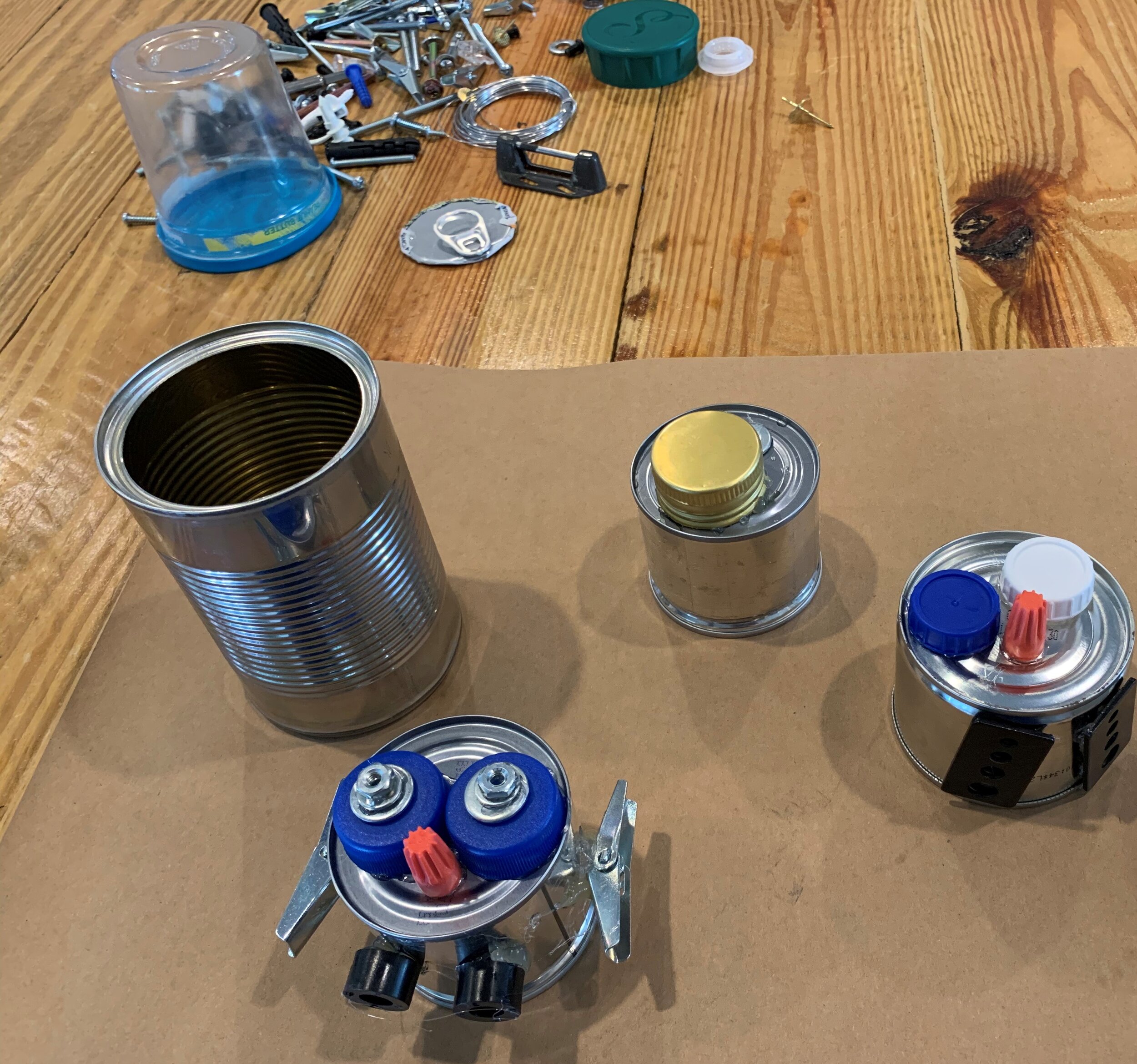
Create some art for home with our little ones. With families spending more time at home, here is an activity to do with children using recycled tin cans depending on the child’s age and/or developmental abilities.

Make animals from cans. Here my little one and I cleaned out our junk drawer and got things to glue on the cans to make owls. Be sure to set the activity up for safety and supervise children at all times. Can you have fun repurposing tin can. Yes! Yes, you CAN do it!

recycled can art.jpeg