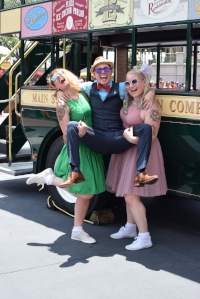
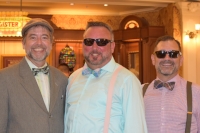
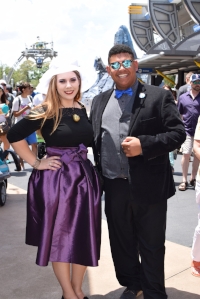
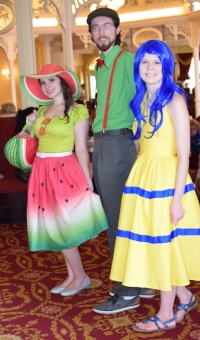
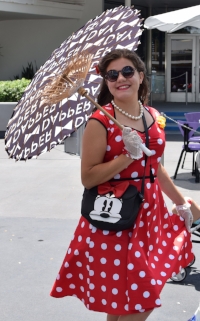
Playing dress up is an activity many children enjoy. Early childhood programs often include a socio-dramatic play area or center in America. On a recent trip to Disney World I saw people of all ages engaging in the fun of dress up on "Dapper Day." Twice a year guests arrive at the Disney gates dressed to the nines. How fun to see that some "grown-ups" have not outgrown this playful part of childhood.











Man's Best Friend Receives Accommodation
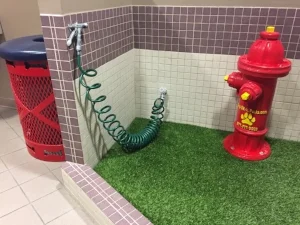
Maybe it has always been here and I just now noticed it. Across from the gates in Concourse B at the El Paso, Texas airport exists a quiet and relaxing lounge for service animals.

Years ago I had an internship with Dr. Debra Hamilton. We traveled throughout the county providing home visits to young children with disabilities and their families. Dr. Hamilton had a black lab named Hagar who was her service dog.
One family we worked with that summer had a toddler who was losing her vision just like Dr. Hamilton. When we would pull up to her driveway, "Sonya" and her siblings would be lined up at the window waiting for Hagar to arrive. Dr. Hamilton promised the children they could play with Hagar if they allowed "Sonya" and us time to work during the visit.
Hagar was always laser focused during the session. Once we were done working, Hagar turned into a playful puppy with his tail wagging enthusiastically when his service vest came off.
Thank you El Paso airport! What a thoughtful way to serve those who provide so much service to others.


“Hold On, Mr. President!”
The United Nations Educational, Scientific and Cultural Organization, or UNESCO, has recommended that we prepare young people for living in a world of powerful images, words, and sounds. Parents and professionals working with children have a responsibility to help them interpret and create personal meaning. What do we need to know about media that can help our children?

This was a question I asked renowned reporter, ABC news anchor, author of the book "Hold On, Mr. President," and White House correspondent, Mr. Sam Donaldson.
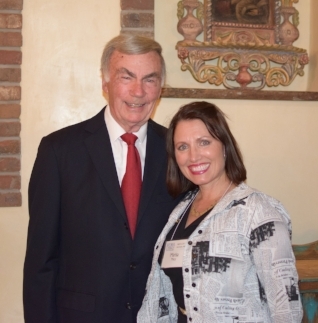
Mr. Sam Donaldson at our state's annual press women conference.
Check out the podcast to hear Mr. Donaldson share his ideas on several topics like: early childhood education, communication, media literacy, asking questions of public officials, and much more. http://www.marisamacy.com/podcast/
Source: Donaldson, S. (1987). Hold On, Mr. President! New York: Random House Inc.

Abecedarian
The term “abecedarian” means to learn the rudiments of something, or alphabetical arrangement. In educational circles, the Abecedarian Project refers to a study which explores the impact of early childhood education on babies who were born between 1972 and 1977. Researchers have been following the babies across their lifespan to determine the impact early childhood educational opportunities have on them. I am so lucky to be able to talk with interesting, smart, and charismatic leaders on our Buttercup iTunes show. Recently, I got a chance to talk with Dr. Craig Ramey who pioneered the legendary Abecedarian Project on episode 10 of the BUTTERCUP podcast.
It is amazing to me how researchers can conduct longitudinal studies without losing participants over time. Attrition, or participants dropping out of a study, can be a problem in research. When I asked Dr. Ramey about this he said that as a researcher he tries to share his appreciation for their contribution and treat participants with respect. He and his team do things like send birthday and holiday greeting cards to participants. The work he and his team do to maintain participation by the people in their study has proven a successful strategy because the babies are turning 45 years old this year and are still participating in the Abecedarian Project.
Thank you to Drs. Craig and Sharon Ramey and all involved in the Abecedarian study for your major contribution to child development research. Check out the podcast to hear Dr. Ramey discuss the interesting things they have found about the importance of early childhood education, as well as implications for policy development. http://www.marisamacy.com/podcast/

Dr. Craig Ramey
Lights, Camera, Action!
Since World War II, ethical standards for conducting research with human participants has been evolving. Researchers affiliated with a university MUST get approval from their institutions’ Internal Review Board BEFORE beginning a study with human participants. Outside of academia there may be different processes and standards for conducting research with human participants. If this topic is of interest to you, consider reading a book by Rebecca Skloot about the evolution of research on a human subject by the name: Henrietta Lacks.
The human cells are referred to as HeLa for the first two letters of the participant’s first and last names. Skloot tells the story of how cells taken from Lacks in 1951, without her permission, have been used widespread by scientists all over the world for several decades to learn more about a range of conditions including polio and cancer. This fascinating story is going to be told on HBO this month. Oprah Winfrey plays the daughter of Henrietta Lacks who shares the impact the research on HeLa cells has had on her life and of other members of the Lacks family. Do you hear that sound? That’s me setting my DVR. I can’t wait to see this movie!
Skloot, R. (2010). The immortal life of Henrietta Lacks. New York: Crown Publishing Group.
Bird Feeder: Spring Craft
Are you looking for a spring activity to do with the little ones in your life? Look no further than your kitchen pantry and bathroom. To make a feeder you can set out on nearby trees for your feathered friends, gather the following things: peanut butter, sunflower seeds, and toilet paper rolls. Start by smearing the peanut butter onto the cardboard. Next, coat the peanut butter rolls with seeds. You’re done! Simple!
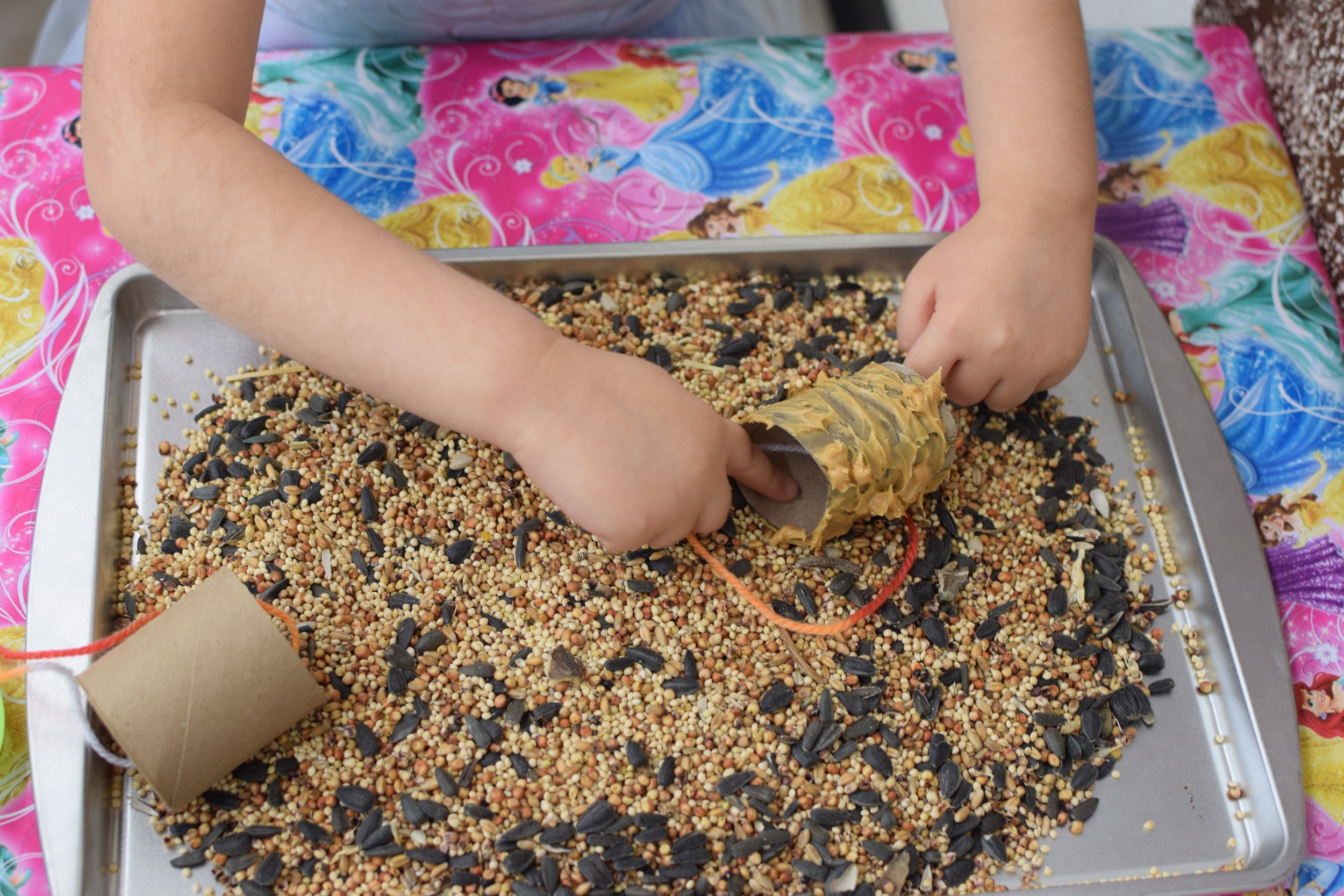
Bird feeder
Have fun doing this craft with kids, and get ready to see the birds nibble their way through spring. Attracting birds to a child’s environment creates endless opportunities to learn and be entertained by nature.
School Ring

Col. Ben Skardon
A school ring saved his life.
Every year at this time, thousands of people come out to the New Mexico desert at White Sands Missile Range (WSMR) to run a half or full marathon. Participants can choose to do the event with a 35-pound pack. This is no ordinary race. It is a tradition for many who have a connection to the Bataan Death March which took place in the Philippines during World War II.
Col. Ben Skardon is a survivor of the Bataan Death March. Yesterday, at the age of 99, Skardon spoke about his experiences at Bataan during WWII to a standing room only crowd in a WSMR theatre. He stood at the podium and read his eloquent words then responded to questions with a sharp intellect and with details that seemed like it was just yesterday when the events happened.
While in the prisoner of war camp, Skardon found two other American soldiers who were from his alma mater—Clemson University. The three friends stuck together having their school as a common bond. Skardon kept his Clemson ring hidden from his captors in places like his socks.
The Bataan Death March was 69 miles in the grueling heat with many American and Filipino casualties. Along with yellow puss discharge in his eyes that sealed them shut, Skardon was suffering from beriberi, malaria, and diarrhea. When it looked like death was imminent, his Clemson brothers sold his university ring to buy a chicken, cooked it, and fed it to Skardon. He described how every part of the chicken was consumed leaving only white bones because even the marrow had been sucked out. The nourishment he got from the chicken gave him enough fuel to finish the march. Skardon’s Clemson brothers did not make it home from the war. When Skardon came home he got married, started a family, and became a professor at Clemson University.
If you are out on the course today you will notice his posse because they are the ones with the bright orange shirts that say, “Ben’s Brigade.” Col. Skardon plans to walk 8 and a half miles, like he has done in recent years, with friends and family who have come to support him.
Col. Skardon attributes family and faith for getting him through difficult times. In Latin, the words alma mater mean “nourishing mother.” The people, places, and experiences from school can be an impactful and enduring part of our lives. Skardon’s school ring is so much more than a piece of jewelry. The memory of his ring is a symbol of love.
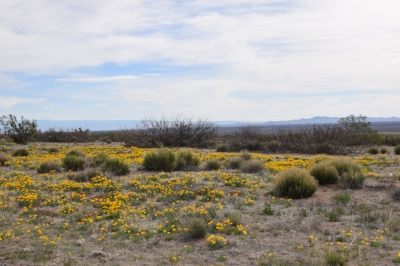
Blooming desert at WSMR
Race website: http://bataanmarch.com/
Further reading on the Bataan Death March by New Mexico resident Hampton Sides:
Sides, H. (2001). Ghost soldiers: The forgotten epic story of World War II’s most dramatic mission. New York: Random House.
YouTube video: “Col. Ben Skardon’s Amazing Ring Story”
Stanford
“Do you love children? Do they know it? Children will not learn from adults who don’t love them,” said Major General John Henry Stanford who was hired in 1995 to serve as the Superintendent of the Seattle School District. His leadership skills were unorthodox but widely admired by teachers, principals, students, and parents. When he was hired he promised, “Give me a mission and I will get it done.”

Major General John Henry Stanford
Many influential leaders have been teachers. At least four American presidents were teachers. Poets, writers, artists, musicians, politicians, inventors, and scientists have been leaders in the classroom. Here is a short list of some famous teachers:
Al Gore, Alexander Graham Bell, Andy Griffith, Art Garfunkel, Bill O’Reilly, Billy Crystal, Clara Barton, D. H. Lawrence, Dan Brown, Frank McCourt, Gabriel Byrne, Gene Simmons, George Orwell, Hugh Jackman, J. K. Rowling, Jon Hamm, Kal Penn, Kate Capshaw, Laura Bush, Laura Ingalls Wilder, Laura Mercier, Leonard Maltin, Louisa Mae Alcott, Madeline Albright, Maya Angelou, Mr. T, President Barack Obama, President Jimmy Carter, President John Adams, President Lyndon B. Johnson, Robert Frost, Roberta Flack, Sheryl Crow, Stephen King, Steve Wozniak, Sting, Sylvester Stallone, Thomas Paine, and Tony Danza.
Major General Stanford was buried in 1998 in the Arlington National Cemetery after fighting leukemia. A book he wrote called, “Victory in Our Schools: We CAN Give Our Children Excellent Public Education” lays out much of his vision where he stated, “I produce destinies for children!” I would love to have a conversation with Stanford to learn his thoughts and ideas about public education today. I wonder what he would say...

Time
I can make a proper French onion soup, or onion soup gratinée. Thank you, CIA! The main ingredients are simple—onions and chicken broth. Oh and sherry! The soup’s flavor comes from time. In order to develop the correct flavor, the onions need to cook slowly so they can become caramelized and acquire a deep rich color like espresso. Care needs to be taken so the onions don’t burn.
Gratinée means browned. The brown coloring comes from the onions being scraped on the pot with a wooden spoon for about an hour. Chicken (NOT beef) broth is poured over the onions once they have reached perfection.
Many cooks take a shortcut when making onion soup by using brown beef stock (for the color) instead of chicken stock. Shortcuts can save time. Shortcuts can sometimes make life easier. Shortcuts do not lead to optimal outcomes.
A professor of mine at the University of Oregon once wrote an article about the tyranny of time. He showed how missed opportunities for students in special education can have a significant outcome on child well being and school success. The earlier we can address a child's needs can make a big difference for the child and his/her family.
The Individuals with Disabilities Education Act (IDEA) has a component called Child Find where it is the lead agency's responsibility to locate children eligible for services in a timely manner. No shortcuts, please. Early identification of a delay or disability is of paramount importance in the lives of little ones. Time matters in childhood.

Does Agency Status Matter?
The lead agency is Education for school age special education. However, the lead agency varies when it comes to special education for infants and toddlers (Part C of IDEA). Some states may have education, whereas other states may have social and/or health services. For example, the lead agency for infant and toddler services is Education in Oregon. If a child and family moved to New Mexico the lead agency is Health.
The eligibility criteria and federal funding awarded to each state for IDEA-Part C services varies from state to state in America. What does this mean for a family with a child who is eligible for early childhood intervention due to a risk, delay, or disability? It could mean that if they move to a different state they may experience differences in child/family services.
A recent study examined lead agency status in the United States and outlying territories. Specifically, Dr. Torres wanted to know if there is a functional relationship between a lead agency’s status for early intervention and the amount of per capita funding awarded to the state for services after controlling for population size. She found no statistically significant difference in lead agency status and funding. She did find that outlying territories experienced 14 times more funding when compared to the 50 states.
Dr. Torres also wanted to know more about the criteria used for early intervention (Part C) eligibility determination. She used a formula by Dunst and Hamby (2004) to classify the restrictiveness of eligibility criteria as: (1) broad or liberal (includes environmental and/or biological risk), (2) moderate, (3) narrow (does NOT include environmental and/or biological risk). She found no statistically significant difference in lead agency status and criteria for defining the eligible population.
This study is one of the first of its kind to examine lead agency status as the independent variable. Research is an important endeavor that requires continued funding. A quote by the writer Zora Neale Hurston states, “Research is formalized curiosity. It is poking and prying with a purpose.” Let us remain curious! Money to do research helps too!
Source: “Variability in State Lead Agency Eligibility Criteria and IDEA-Part C Per-Capita Budget Commitments: An Exploratory Analysis,” by Christina Torres (2017)
"I Like My (fill-in-the-blank) Shoes"

This all started in a mad rush to leave the house at 5am in the dark to get to the airport. I just spent part of my vacation wearing mismatched shoes. Yup! You read right.
It wasn't until I got to security that I noticed I was wearing a different shoe on each foot.
On my left foot I wore an old hiking shoe with a raveling shoelace that I tried to repair with clear tape.
On my right foot I wore a new Mizuno tennis shoe (not really for tennis but that's what I've always called them like "pop" or "potato bug") that my parents gave me for my birthday.
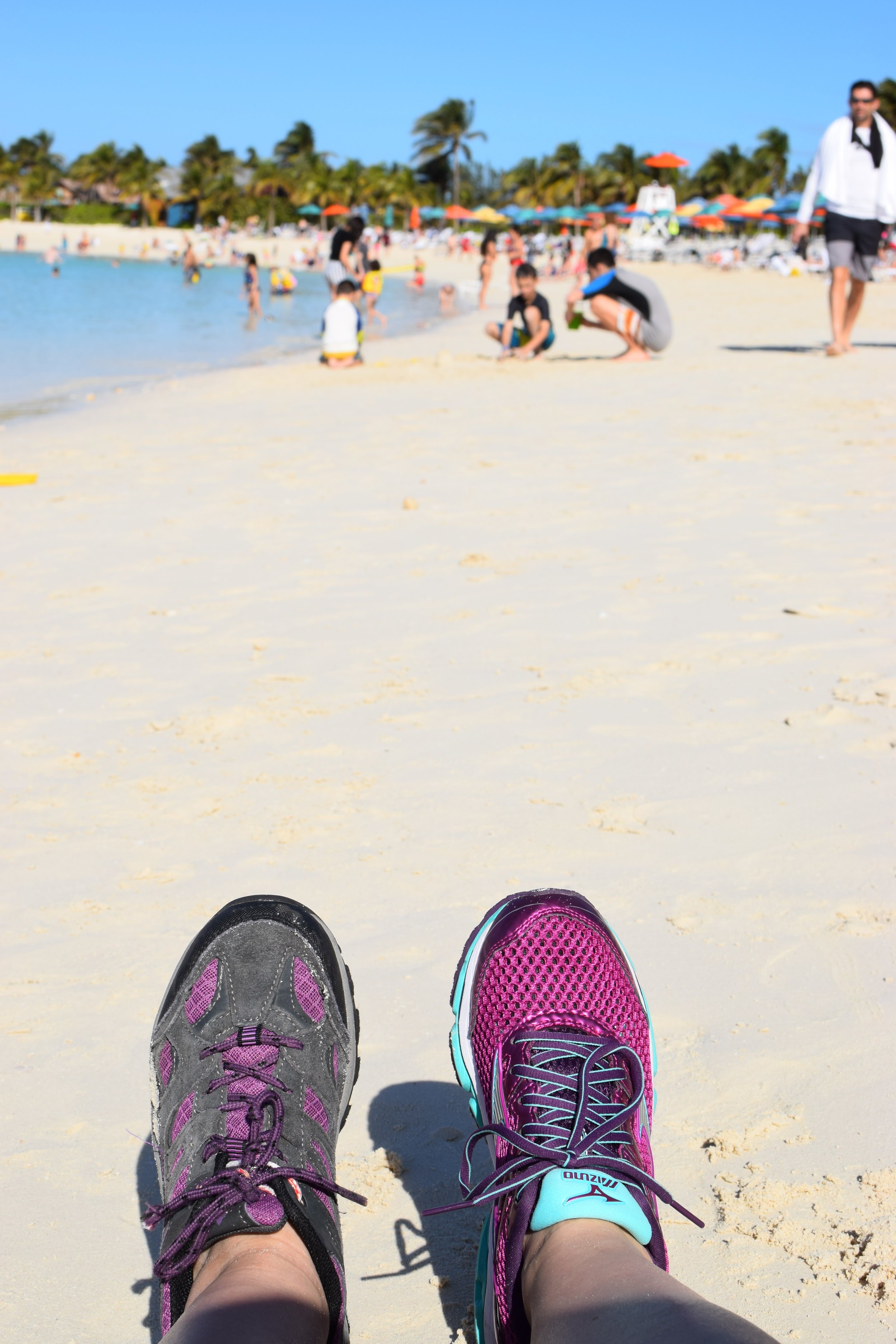
What's a Mom to do? Write a letter to Shoe Carnival and ask corporate to install stores next to TSA? Goodness no! I decided to follow advice from Pete the Cat. When things don't go as planned, go with the flow. "It's all good!"
Litwin, E., & Dean, J. (2010). Pete the cat: I love my white shoes. NY: Harper Collins.
Crayons
My dear friend, Dr. Steve Fairchild, is a retired professor from the early childhood education program at James Madison University. He taught an early childhood science class and shared some really cool experiments with me. One of them was with crayons. There are exciting ways to re-purpose crayons and integrate the arts with science.

One way to transform a batch of misfit crayons is to melt them into new things. I wanted to make chunky crayons for toddlers, and students with fine motor delays who have limited use of a 3-finger grasp or tripod. I took my friend’s recipe and melted crayons. I experimented with different methods. The first time I put crayons in the oven. The finished product was meh.

The second time I tried placing crayons in an ice cube tray to melt in the hot summer sun. Again, meh!
Then finally I contacted my friend Steve who told me about melting the crayons in a clean tin can (old soup can will do just the trick) over a pan filled with water. Voila! A beautiful hot can full of liquid wax! Pour the liquid mixture into a mold. I used old recycled plastic fruit cups. The crayons pop out easily after they are dried.
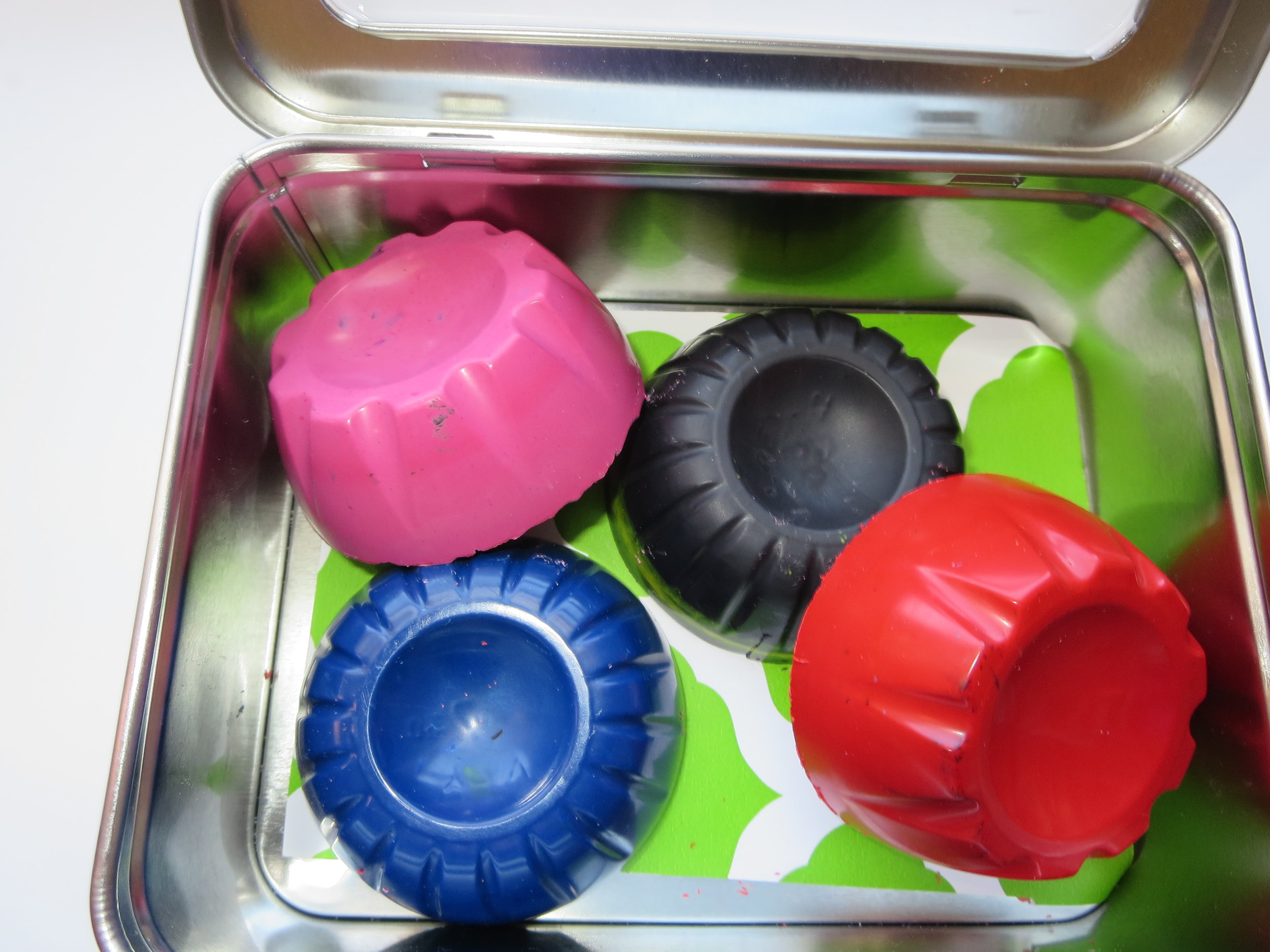
Homemade Crayons
These homemade chunky crayons are a good alternative for children who are not ready to use their fingers to create a tripod grasp. The best part is the children can help you make them.
Carplay Diem
It is that time of year when people pile into cars and hit the open road to visit friends and family.

Being stuck in a car for hours does not have to be boring, or an unpleasant experience. Seize the day to play and have fun on your road trip. Joe Desimone was a farmer who understood Carplay Diem and the need to enjoy the journey. Instead of bringing his fruits and vegetables to an outdoor market to sell in boring cardboard boxes, he essentially created a parade float showcasing the prized beauties from his farm.

Pike Place Market proprietor, Joe DeSimone.
The voyage can be enjoyable for adults and kids with a little planning. Creating a way for the family to interact with one another in the car can be a challenge when individuals have their faces planted in their electronic devices. Here are some ideas for having an interactive road trip with your children:
Make a busy box for each child. Take a shoe box and have the child decorate their own entertainment box. Include objects they can manipulate with their hands easily and from their car seat. Consider objects where the child uses her/his imagination. Include novel things that has the potential to engage the child for an extended time period.
Check out audio books the whole family can enjoy for free from the public library. A favorite author of ours is Kate DiCamillo. She writes interesting stories that can entertain both children and adults.
Make and take snacks the family can eat at rest areas or on the road. Have kids help pick out what to include in their snack bag. A carabiner can be attached to the back of the seat with his/her bag of goodies and/or other objects needed for the car trip.
Play games in the car. Word Association games are where someone in the car begins with a word. Others in the car say words associated with the original word.
A game of “I Spy with My Little Eye Something _____…” is where each person has a turn coming up with an object that others have to look for outside of the car.
The license plate game is a fun way for kids to learn about geography and states.
The 20 Questions game is where others in the car ask questions that can be answered with yes or no of the person who has thought of a person, place, or thing.
Here is a picture of my glamorous Mama going somewhere in her muscle car. We could make up a story about where she is going all dressed up. While in the car, pick another car on the road. Be sure everyone in the car has gotten a good look at it. Then make up stories about the people and/or the car.
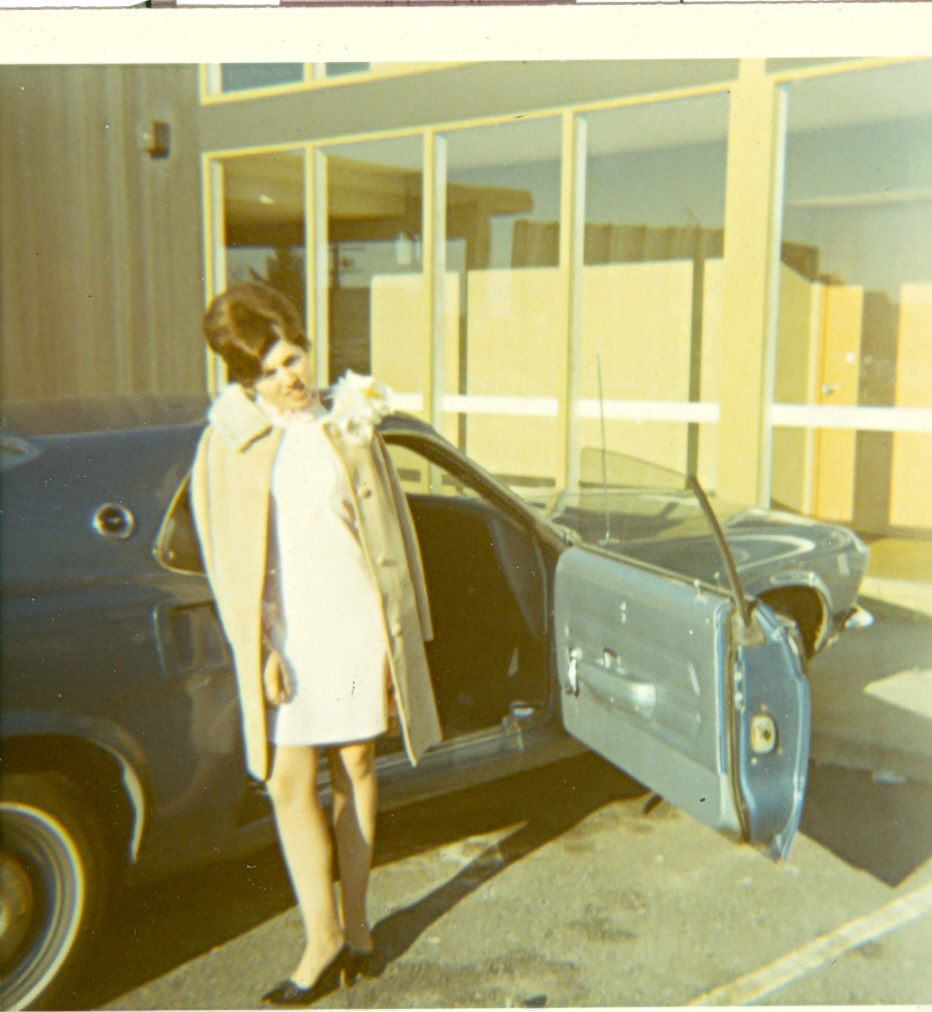
My Mom circa 1969
Finally, the Going on a Picnic game gets players thinking and talking about what they would bring on a hypothetical picnic. Feel free to create a variation on one of these games, or the car can make up their own game(s).
This time when you travel by car with your family, make a positive memory each person can take with them into the future. The memories of interacting with one another cannot be replicated from playing Angry Birds for 16 hours. Play and have fun on your road trip by interacting with each other. Carplay Diem!
Zero to Three
This week an article was published in the journal, Zero to Three. In it, my co-authors (Drs. Steve Bagnato and Robert Gallen) from the University of Pittsburgh and I talk about ways to assess young children that build on their play and observe them in natural settings. We describe resources that can support professionals and parents. If interested, follow the link for more information.
Macy, M., Bagnato, S.J., & Gallen, R. (2016). Authentic assessment: A venerable idea whose time is now. Zero to Three Journal, 37(1), 37-43.
Asking a Favor
How we ask for something many times determines the outcome. I had the good fortune as a child to attend a canoe camp on Orcas Island in the beautiful Pacific Northwest. We paddled our hearts out on trips to Friday Harbor, Orcas, and Jones islands. Back at camp headquarters we had a well-stocked camp store. My parents gave me a little spending money for the store, but the budget evaporated early in my stay. I spent it on candy. What’s a girl to do stuck on an island with no money? I put my stamps and stationery to work—I wrote my parents a letter (this was in the late 70s before cell phones).
Around the same time a researcher from Harvard, Dr. Ellen Langer, published a paper with her colleagues based on experiments they conducted on how to ask a favor. In their experiment, the researchers set up a copy machine at a university and experimented with different types of favor asking (Langer, Blank, & Chanowitz, 1978). They found there was greater compliance with small favors compared to big favors. There was also more compliance when a reason was given, rather than no reason or explanation for asking the favor.
I wasn’t reading research from Harvard during camp, but somehow I intuitively knew how to ask my parents for a favor. The letter from camp started by me telling them how much I missed them, and then all the things I was doing at camp. I asked for a modest amount of money so that I could buy materials to make a lanyard key chain. The small favor, paired with a reason for why I needed it, resulted in compliance. Ca-ching! My awesome parental units sent me way more money than I expected.
When we work on a team, we may need to ask team members for a favor. Effective communication can make team work more productive. The next time you need to ask a favor, try applying the Langer principles. You may just get your flashy lanyard in the end.
You’ve Got a Friend
We are lucky to be able to serve children and their families. Few professions can have such an immediate influence on a child and his/her family unit. When I was teaching 7th and 8th graders, I got a call during my planning period from the bus garage for the school district. On the phone was an angry school bus driver with a bee in his bonnet who said that one of my students in the special education program would no longer be allowed to ride “his” bus. My student was caught on tape breaking bus rules and was kicked off the bus for the rest of the school year. After his rant, the bus driver’s supervisor got on the phone and we discussed next steps.
Students in special education have a legal right to school district transportation. If the school district removes that right, we need to document changes in the child’s Individualized Education Program (IEP). As the student’s case manager, it was my job to facilitate an emergency IEP meeting and do a “Change of Placement” to his program since he had no ride home that day.
I called the student’s parents. His Mom answered. We were able to do the IEP meeting over the phone. Since the school day had not ended, we made arrangements for her to pick him up that day. She was at work and took the rest of the day off to address her son’s needs. This Mom was apologetic for her son’s behavior, understanding of the school district’s position, and an awesome member of the IEP team. She did not want him to have “specialized” transportation where a district bus or van would pick him up door-to-door. She and her husband planned to transport their son to/from school.
Her ability to collaborate with us school folks was amazing. I thought to myself on my way home that night, “I could be friends with this Mom.” During the drive, I hummed along to the James Taylor song “You’ve Got a Friend.” I fantasized about us shopping at the mall, getting BFF matching necklaces, having customized friendship pillows embroidered, and getting matching manicures and pedicures. Not really. I sometimes am prone to hyperbole and other forms of exaggeration. The IEP bus story, however, is true. One hundred percent (well make it 98% true – remember I sometimes exaggerate).
If I could be queen and improve practices with families, I’d start by putting on a jeweled crown. I would then wave my fancy authoritative wand and demand peaceful harmony among parents and teachers. When teachers are granted their teaching licenses, they would also receive a big tapestry magical bag—like Mary Poppins—with all the incredible tools needed to foster positive rapport with parents. That would be practically perfect in every way.

Don't Stand Close to the T.V.!
Thanksgiving decorations in stores can mean only one thing. It is almost time for the kids to go back to school. I wrote this song as a reminder to enjoy these last days of summer vacation with our little ones. After all, the holidays will be here before we know it. Happy Singing! ~Marisa
Don't Stand Close to the T.V.!
(Sung to the tune “Don’t Stand So Close to Me” by the Police)
Mom teacher, the subject
Of shouting out orders all day.
She wants them, so badly
To do just what she says.
Inside her, there's longing...
To turn a brand new page.
But no use, they don't listen
No matter what their age.
Don't stand, don't stand close
Don't stand close to the T.V.
Don't stand, don't stand close
Don't stand close to the T.V.
Her friends are, so jealous
You know what people say
Just think of ALL THAT TIME OFF
You can take a "personal day."
Temptation, frustration
You know how bad it gets.
Use your inside voice!
Make a good choice!
If you want to be teacher’s pet.
Hands to yourself!
Put it back on the shelf!
Here is what she has to say.
Please walk, don't run!
Is your homework done?
Why can't they nicely play?
Don't stand, don't stand close
Don't stand close to the T.V.
Don't stand, don't stand close
Don't stand close to the T.V.
Use your words!
Don't call them nerds!
Oh no, please don't cry!
Just try your best!
And give it a rest!
Wash your hands and don't forget to dry.
Did you read your book by Nabokov?
You need to cover your cough!
Because I said so!
Now go!
Don't stand, don't stand close
Don't stand close to the T.V.
Don't stand, don't stand close
Don't stand close to the T.V.
Mise En Place
My husband and I are friends with another couple who are foodies. We are not. My husband is a telephone-chef, and I am an experimental cook who cannot follow a recipe to save her life. We enjoy hanging out with our friends and have learned a lot about their hobby.
One weekend, in the cold of winter, we took a drive up to Hyde Park to take a cooking class at the Culinary Institute of America (CIA). Vassar College and President Franklin D. Roosevelt’s home and presidential library are in this area too, as well as the Morse Code Museum. It is worth a trip to see the Hudson and this gorgeous part of New York.
The CIA weekend classes are offered to non-chefs, or the home cook. There is a separate more intense educational program for serious students. The weekend classes have different topics than the regular CIA curriculum. For example, my husband and I took the Soups for All Seasons class where everyone in the course made soup.
The soup class started in a traditional classroom with desks and chairs. Chef Paul DelleRose gave us a packet of written materials, along with a CIA cookbook. He explained cooking concepts. We took notes! He wrote on the chalkboard. We took notes! He provided us with direct instruction on how to use the equipment, materials, ingredients, and read a recipe. We took notes! Chef took a sip of tea and we all took notes!
Chef gave all students a CIA apron, we washed our hands, and then we were ready to cook. Chef and the opening pages of the cookbook say that what happens prior to cooking is the most important stage of the process. This is not unlike teaching where environmental planning is an essential stage.
Chef Paul and his assistant helped each student in the class with their soups. When we were done cooking, we poured the soups into little sample cups. Everyone in the class got to taste 16 different soups. When the class was done, we met up with all the other CIA weekend classes in a big banquet hall for a delectable feast prepared by the CIA staff. We also got to sample cured meats the Charcuterie class made. We sat with our friends and compared notes on our two classes.

They went to an advanced gourmet class and made a savory meal plus a dessert. The cooking environment between our classes were standard. They had ovens, sinks, knives, pots, and pans just like we did.
The one thing that was different between the basic soup class and advanced gourmet class was how the environment was used. Members in the advanced class were sophisticated in how they cooked in their kitchen space. When they cut meat with a knife they cleaned and returned it to where it belongs. When they used a colander to drain liquid, it was returned to its home on a shelf. When they were done using their food prep space, they cleaned it and got it ready for the next steps of the recipe they were making.
In my entry-level soup class, everyone’s kitchen space looked like a tornado hit. Messy! The French expression mise en place translates into “everything in its place.” Chef Paul went over this concept in the classroom before we entered our kitchens to make soup. But, apparently none of us got it. I wonder if Chef felt like saying, "Unless you clean up this pig sty... NO SOUP FOR YOU!"
Mise en place is harder than it would seem to actually apply in a kitchen when you are learning a new way of cooking. An efficient kitchen and classroom has everything in its place. When an environment is organized it runs smoother and safer.
Intentional environmental planning can be observed in preschools where teachers implement a protocol of visually organizing the classroom. The use of pictures, icons, and visual summaries help students become independent in their setting. For instance, bins have pictures on them so children know where to return classroom materials when they are done. This helps children who are not reading words yet or have a disability, because they can understand the visual information.
Teachers use intentional arrangement of the environment to set students up for success. Parents organize space in ways that are conducive to the needs of their family. Take note, to have a "Chicken Soup for the Soul" experience with kids implement mise en place.
Fink, B., & Culinary Institute of America (2009). The Culinary Institute of America's new book of soups (2nd ed). New York: Lebhar-Friedman Books.
Kids Say and Do the Funniest Things
Kids are funny. It is such a treat to be surrounded by (potential) comedians. Just think how lucky we are to have this humor resource on a daily basis. It would cost a fortune to see Seinfeld, Gaffigan, or DeGeneres in a stand-up concert Monday through Friday. Milton Berle once said, “Laughter is an instant vacation.”
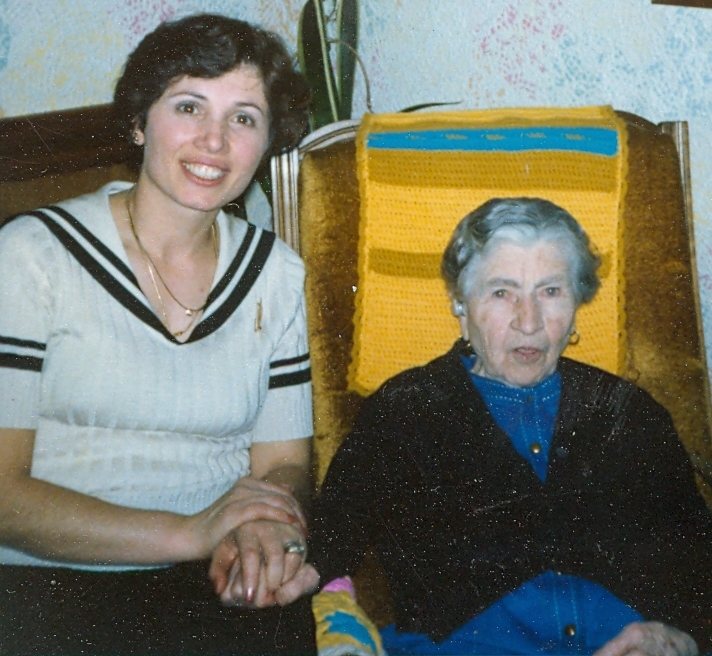
We get an immediate holiday whenever we laugh. Humor is powerful. A good laugh can release stress and tension. My Grandma Galliano lived to be 109. I asked her once what her secret was to living a long life. She told me good food and belly laughs. It just feels good to have a belly laugh. NPR’s Car Talk would get me laughing as soon as I heard Tom and Ray Magliozzi cackling. Their laughter was contagious for me. Students too. Just thinking about some of my past students makes me smile. Do you have a funny kid story? If yes, please share.
In the Garden with Winnie-the-Pooh
As soon as I saw you, I knew an adventure was going to happen. ~Winnie the Pooh
If you are looking for a great read during A.T.T.O., look no further than the beautifully photographed biography of A.A. Milne. Timber Press published, “The Natural World of Winnie-The-Pooh: A Walk Through The Forest That Inspired The Hundred Acre Wood.”
Alan Alexander Milne (1882-1956) is the author of the Winnie-the-Pooh books. Both of Milne’s parents were teachers. He considered himself lucky to have such an idyllic childhood that he returned to his stomping grounds as an adult in his writing for children. The calm village of Hartfield in Victorian London and the English countryside inspired his stories. The Hundred Acre Wood where Christopher Robin encounters the likes of the silly willy nilly old bear, Tigger, Eeyore, and piglet is a real place called Ashdown Forest and the Five Hundred Acre Wood.

The family lived at Henley House which consisted of two detached buildings. A.A. Milne lived in one of the buildings with his Mom, Dad, and two brothers. The other detached building was the schoolhouse where his father was the headmaster. H.G. Wells was one of his teachers that sparked his interest in nature and the surrounding landscape. Alan adored his father and family, as well as school. It was his father’s love of mathematics that ignited a passion in Alan for the subject. At Trinity College, Cambridge Alan studied math before becoming a literary figure. Christopher Robin is based on Milne’s son and toys in his nursery. It is not surprising then, that the man who wrote such a beautiful story about friendship, understanding, and kindheartedness had such a strong meaningful connection between his home and school families.
Aalto, K. (2015). The natural world of Winnie-the-pooh: A walk through the forest that inspired the hundred acre wood. Portland, OR: Timber Press.
Quisque iaculis facilisis lacinia. Mauris euismod pellentesque tellus sit amet mollis.