Pile-ology

I first noticed my daughter hitting her Pile-ology milestone at 30 months of age when one day she removed all the toys from a toy box to create a pile on the bedroom floor. She studied her pile. She touched her pile. She smiled at her pile. 

Then she grabbed as many things from her pile as would fit in her tiny arms and moved her toys from her bedroom to the living room where she continued to marvel at the pile she created. 

Starting around two years, toddlers begin doing something I call: Pile-ology.  During play, the child experiments with size and quantity concepts. Pile-ology is the study of piles. Children gather quantities of items, with diverse shapes and sizes, from one location and transfer them to study in another location.

This type of play does not seem to be practice for a future career at Mayflower or Graebel Van Lines - as far as I can tell. The Swiss theorist, Dr. Jean Piaget, studied his own children. I can imagine Dr. Piaget sitting in a sandbox with a clipboard, observing his children at play, and recording every movement. The Piagets must have had amazing scrapbooks and family records. I'll bet he was able to answer questions like, "Dad, how old was I when I first used a pincer grasp, said my first word, started pulling to stand, or making piles?"

If you happen to notice your child engaging in Pile-ology the next time he or she is at play… no need to panic or call hoarders anonymous. Pile-ology is a typical milestone. Your little scientist is trying to make sense of this marvelous world we live in.

Waiting

“Waiting is the hardest part,” sings Tom Petty. True! Waiting can be challenging. It is not easy to wait for something to happen. Or wait for someone.

Although it can be difficult for children to learn how to wait, waiting is not necessarily a bad thing for children. Waiting can help a young child learn patience and self-control. These are important building blocks for developing social emotional competency.

Waiting for my turn at the wheel at Monsters Inc. Playground at Disney's Flower & Garden Festival

Waiting for my turn at the wheel at Monsters Inc. Playground at Disney's Flower & Garden Festival

Too much waiting, however, could have negative outcomes for young children. I was talking with a colleague about high/low quality early childhood programs. She said an interesting thing that I’m still thinking about four months later...children who are left waiting too long for routines and events are disadvantaged.

High quality early childhood programs are places where children are engaged, and minimal time is spent during a child’s day waiting. When a child has to wait too long, they are often taken from engaged play or meaningful learning opportunities. A useful question to ask is: How much waiting is too much? For each child it might be different. Issues to consider are: the child’s age, developmental status, environment, and routines.

All children need a safe and healthy environment to grow. Patch Adams M.D., said, “waiting in line is a great opportunity to meet people, daydream, or play.” Some waiting is fine… and can even be valuable for children. However, notice how long kids are having to wait during their day. More play and less waiting is ideal.

A Play

We went to see Gilbert and Sullivan’s Iolanthe which was first produced at the Opera Comique in London in 1882. It was my child’s first play. The children’s theatre company sang, danced, and acted in such a way that maintained my toddler’s attention for over two hours. On the drive home, we talked about our favorite things in the play. My favorite part was the music by Sir Arthur Sullivan. In particular, was a song entitled, “When I Went to the Bar” sung by Lord Chancellor who is one of the main characters. He is having a conversation with himself and the chorus repeats “said I to myself- said I.”

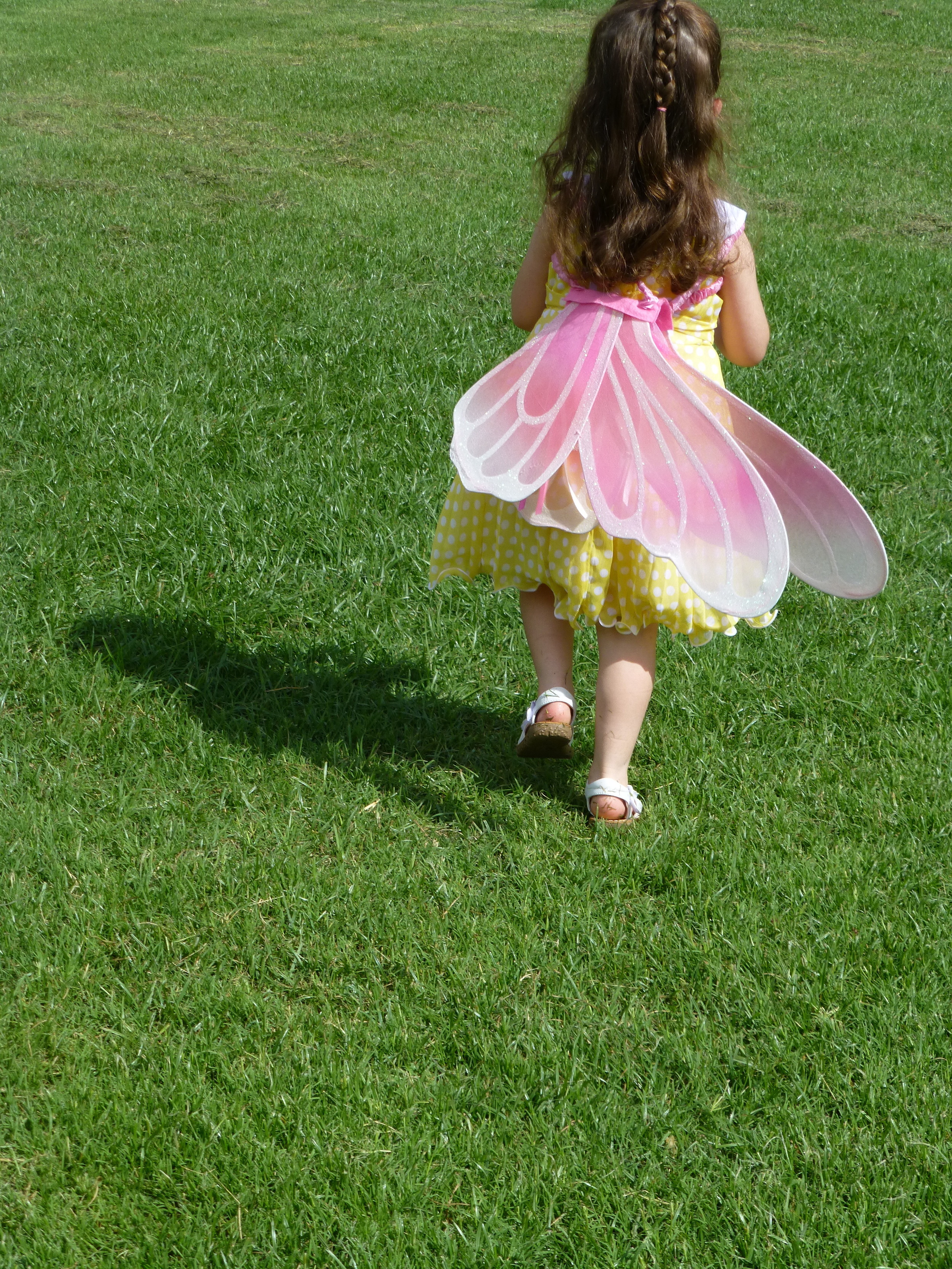
My toddler said the people were her favorite part of the play. The actors and actresses had beautiful singing voices, colorful costumes, and had interesting words and movements. The fairies in Iolanthe wore colorful wings that were similar to the ones my daughter wore to the play

When we were done saying our favorite things, it got quiet in the back seat. At first I thought she fell asleep since it was past her nap time. Then I heard it. A question that Sir Lord Google was unable to help me with at that moment. “Mommy, why do we call it a play?” Hmm. Why is a live, stage performance referred to as a play?     

Maybe it is because the places a play can take you… Said I to myself – said I! Like a roller coaster ride, a play has twists and turns. A play can take you to exciting locations through staging, costume, and story without ever leaving your seat. When we play, we use our imagination and can transport ourselves similarly.

Maybe it is because the audience attending the play is experiencing a collective leisure activity... Said I to myself – said I! Doing something with others can bring us happiness. We need each other. Play is enjoyable when we have others around to join in the fun. It does not have to be engaged play with another person, but parallel play is where we can sit beside and enjoy the other person’s company.

Maybe it is because the creative expression required to produce a play … Said I to myself – said I! Dressing up in costumes, pretending to be something you are not, trying out different roles, and using language in experimental ways are things children do when they play. A live stage production is not all that different than watching a young child play.

Whatever the reason we call it a “play”, a really good one does feel the same as play. There is nothing better than getting lost in play! (Said I to myself – said I)

PLAY

PLAY